
Arena
Sports Management Platform (SaaS)
Role Lead UX/UI Designer
Tools Figma · Jira · Confluence · Slack
Duration Dec 2024 – Present
Status Ongoing – Active product
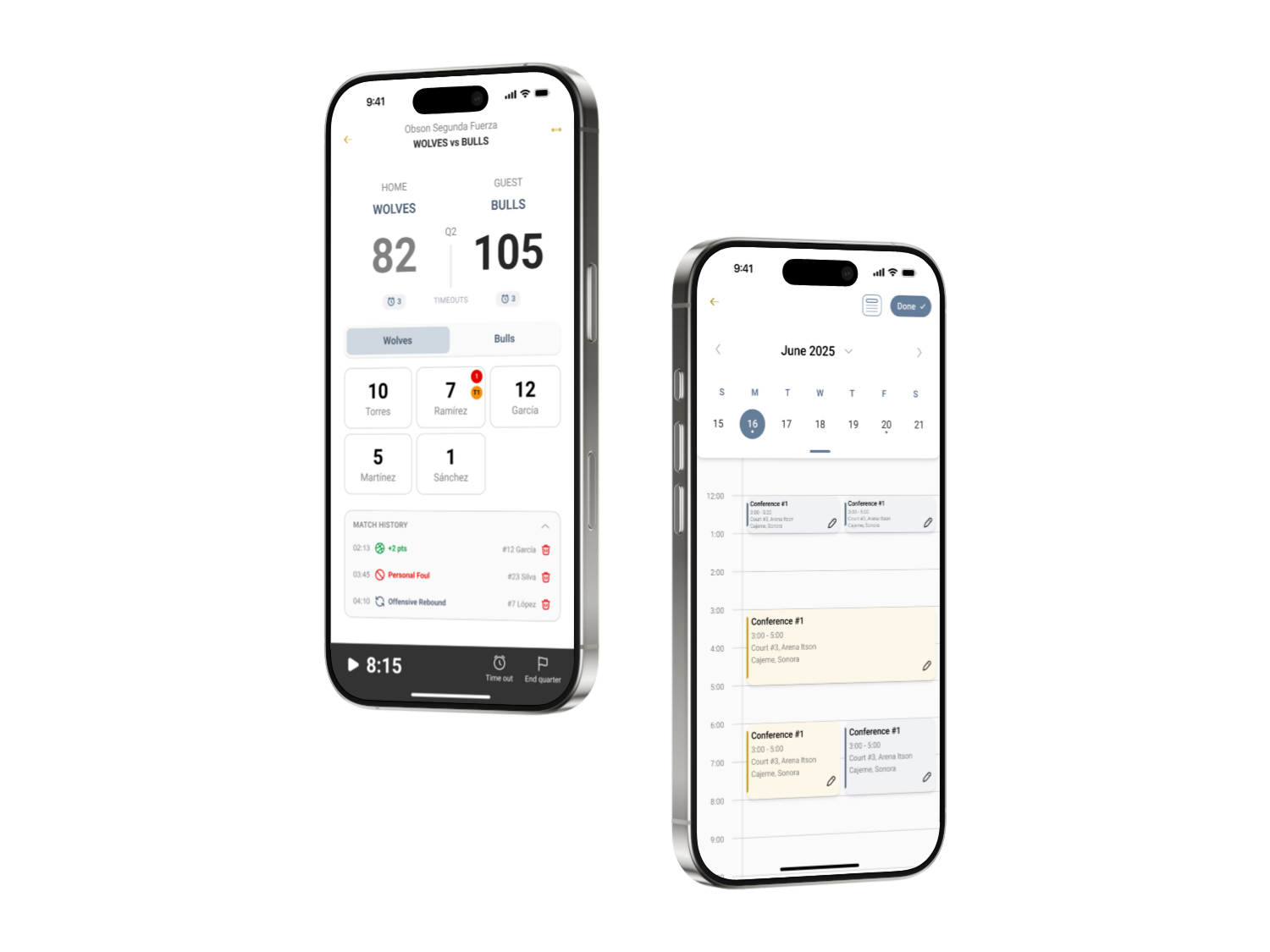
Overview
Arena is a sports platform designed to help organizers create and manage leagues and tournaments, while allowing athletes and spectators to follow competitions, track live scores, and view performance data in real time.
The Challenge
Competitions managed with spreadsheets, paper schedules, and WhatsApp chats
No real-time visibility of scores, standings, or player stats for anyone outside the game
No central place for players to track their performance history across competitions
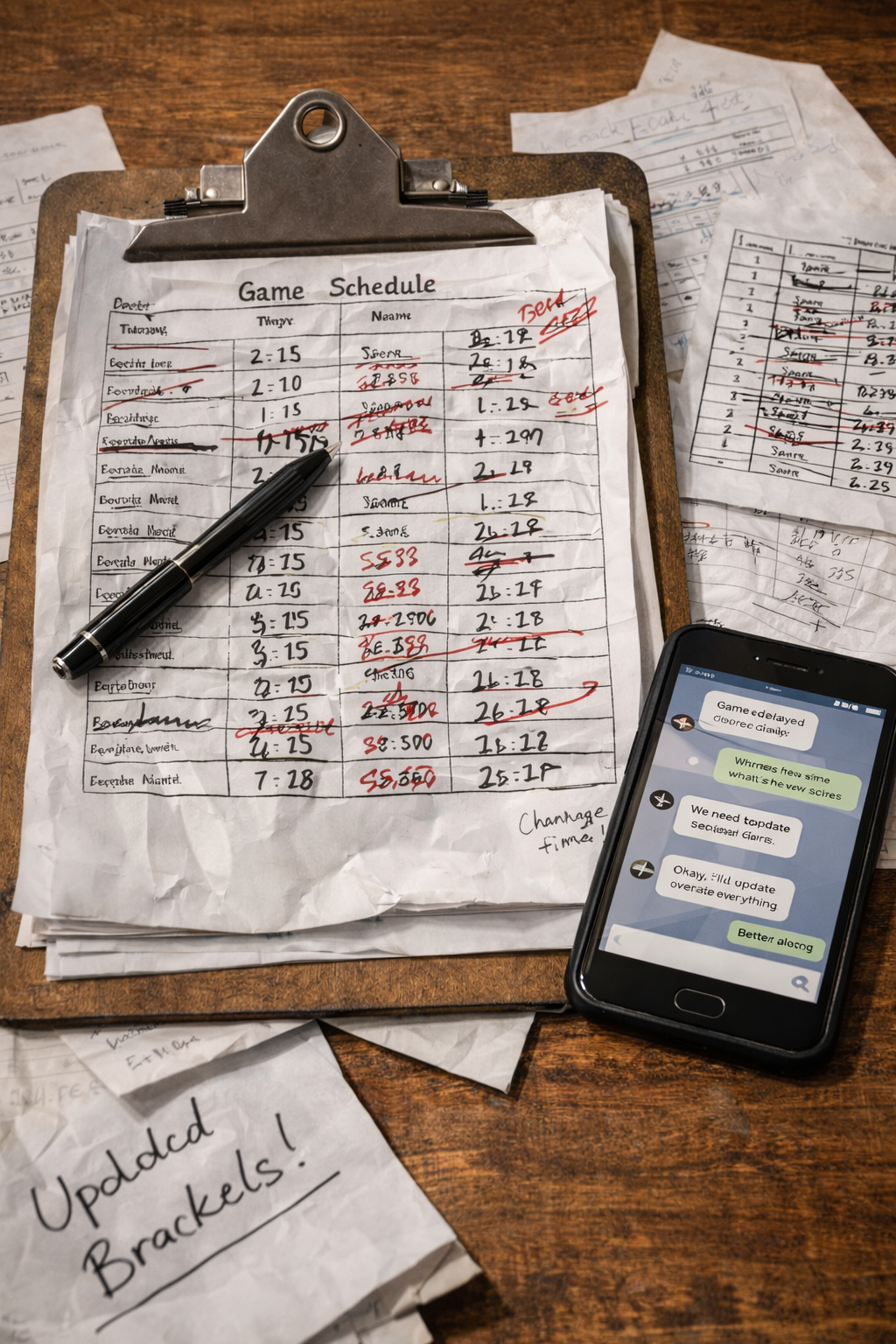
How sports competitions are often managed today
My Role & Responsibilities
I joined Arena as the sole designer when the product was just a concept. Every screen and flow was designed by me, informed by competitive research and continuous iteration with the team.
Design system & component library
Multi-perspective flow design
End-to-end UX/UI design
Information architecture
Developer handoff documentation
Key Design Decisions
Structuring League Creation
The league setup required multiple rules, scheduling logic, and configuration settings. Presenting everything in a single linear form created friction and low clarity.
I restructured the flow into progressive sections to reduce cognitive load. Instead of minimizing features, the focus was on grouping related inputs and creating logical progression.
Live Scoring Under Pressure
Live scoring had to work under pressure: loud environments, officials focused on the game, no time for mistakes. The design prioritizes speed, large tap targets, always-visible score, immediate visual feedback, and undo support. Stats update in real time so coaches and spectators see performance as it happens.
Key Screens
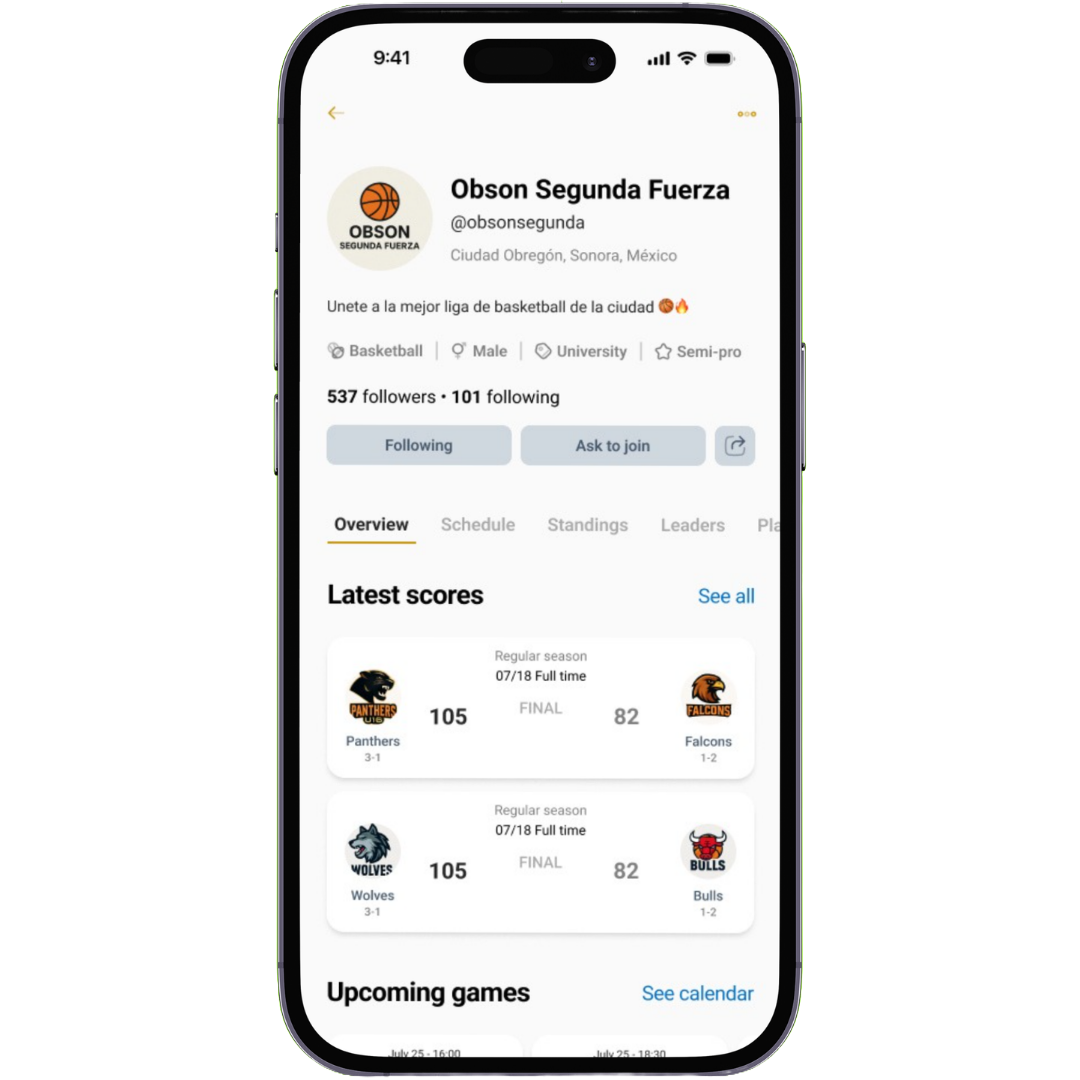
League Profile
League profile as central hubTabs organize content by purpose: Schedule for match calendar, Standings for rankings by division, Leaders for top performers, Playoffs for bracket view, and Awards for season recognition. Each perspective serves a different user need without overwhelming a single view.
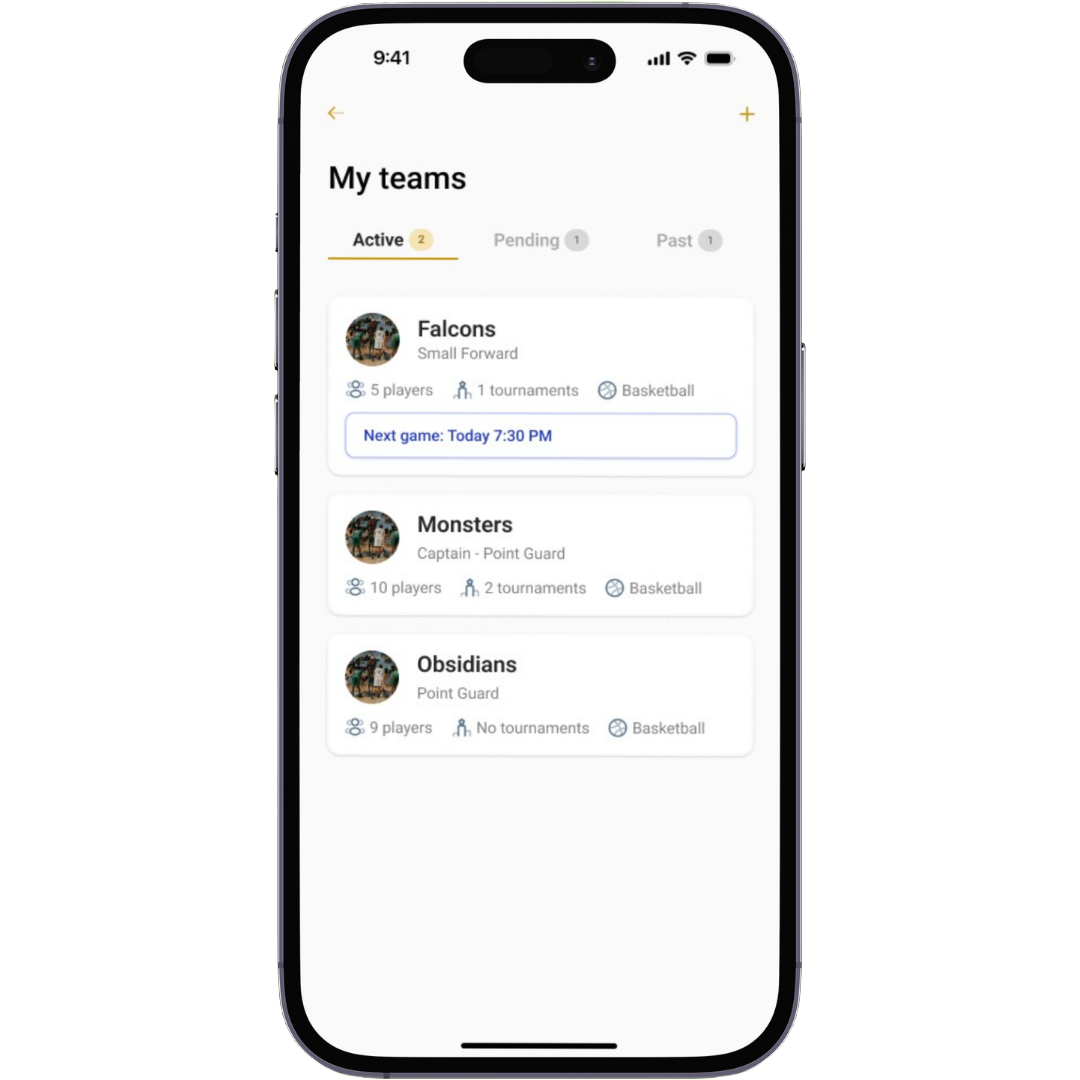
My Teams
Team management with status filteringActive, Pending, and Past tabs filter teams by engagement status. Each card surfaces key info at a glance: role within the team, roster size, tournament count, and upcoming match details when relevant, reducing the need to drill into each team to understand current priorities.
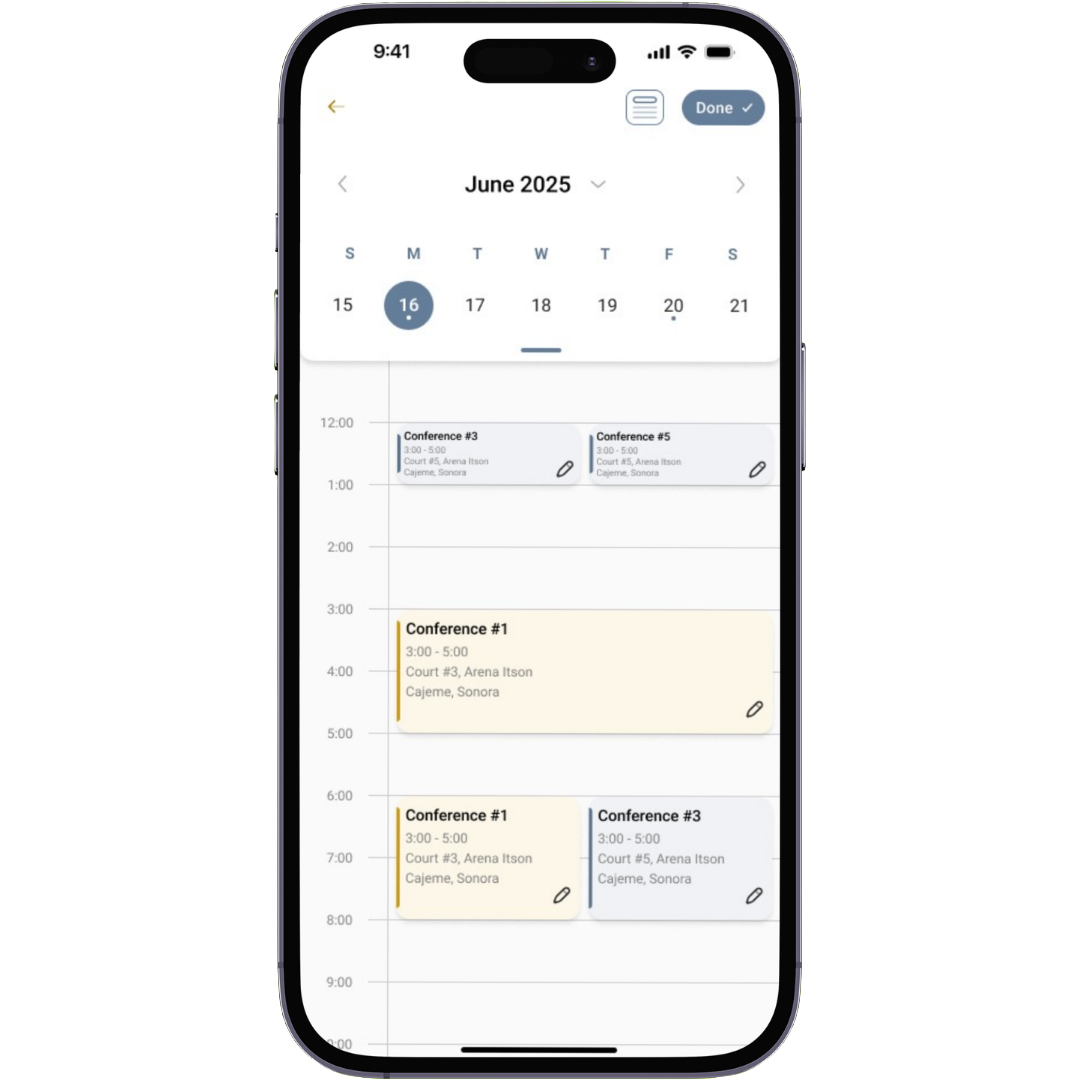
Calendar
Auto-generated match calendarBased on league configuration (teams, format, available courts), the system proposes a complete schedule with time slots and venues. Organizers can manually adjust or approve as-is, eliminating hours of manual scheduling work.
Reflection
What I learned
Designing Arena reinforced that structuring complexity is more critical than simplifying features. Clear information architecture can significantly reduce perceived effort, even when the system itself is feature-dense.
What I would do differently
If I could do one thing differently, I would get the live scoring flow in front of real table officials earlier. Their speed and behavior under match pressure is something you can only partially anticipate through research.