
Healthy app
Role UX/UI designer
Tools Figma, Notion
Duration January - May 2024
Overview
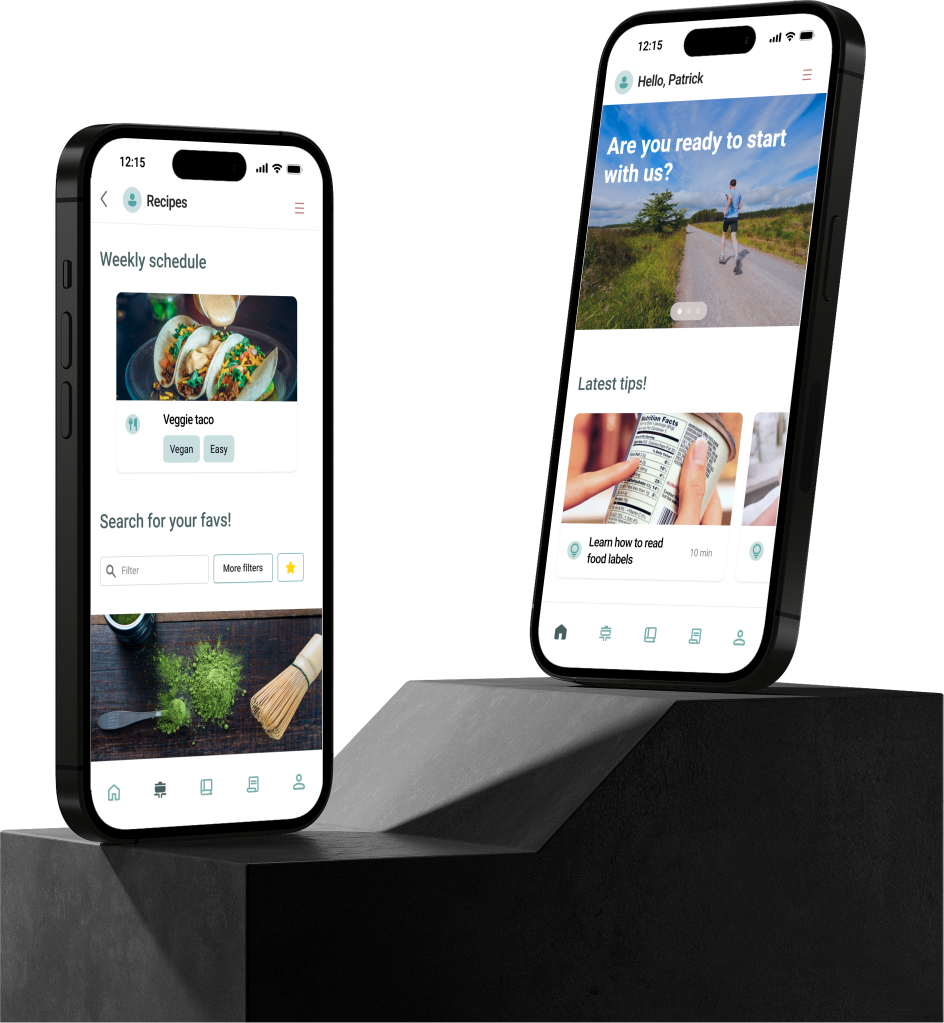
Healthy is a wellness app designed during the Google UX Design Certificate to explore personalized health experiences. The challenge was creating an interface that adapts to users with different medical conditions, age groups, and dietary preferences — moving beyond one-size-fits-all health tracking through contextual onboarding and tailored content.
User Research
*
User Research *
Through research and interviews conducted as part of the Google UX Certificate, I explored how health apps could better serve users with diverse needs: busy professionals managing chronic conditions, parents seeking family wellness solutions, and older adults navigating health tech for the first time.
Key pain points identified:
These insights informed the design direction: an onboarding flow that collects detailed health profile information, and a home experience that surfaces content relevant to each user's specific context.
Lack of personalization for specific medical conditions
Age-inappropriate interfaces that don't adapt to user capability
Generic dietary recommendations that ignore individual preferences and restrictions
High-Fidelity Design
Personalized Onboarding Flow
The onboarding collects health profile information step by step: gender, age, dietary preferences (Traditional, Vegetarian, Vegan, Keto, Pescatarian), chronic conditions, and fitness level. This data shapes the entire app experience, from meal recommendations to exercise routines to health tips.
Home & Content Discovery
The home screen surfaces personalized health tips, meal plans, and wellness content based on the user's profile. Each card shows estimated time and category, allowing users to quickly find relevant content without filtering or searching manually.
Reflection
What I learned
Health apps require deep personalization — generic recommendations don't serve users with specific medical needs or dietary restrictions. Building in flexibility for different user contexts significantly improves long-term engagement.
What I would do differently
I would conduct usability testing with users managing chronic conditions to validate that the onboarding feels supportive rather than intrusive, and ensure content recommendations genuinely match stated needs.